Schema Markup Strategy: How to Secure AI Citations via LLM Data Attribution
Status: Case Study / Verified Results
Environment: Medical/Wellness Sector (Dubai, UAE)
Tools: JSON-LD, Google Search Console, Rich Results Validator
Core Metric: +147% Impression Surge
The Hypothesis: The Attribution Gap
In 2026, the primary challenge for SEO specialists in the UAE is no longer “ranking” on page one it is securing citations in Generative Engine Optimization (GEO).
Managing a portfolio of 14 distinct UAE clients, I observed a consistent “Attribution Gap”: brands with high organic rankings were often ignored by LLMs (ChatGPT, Gemini, Perplexity) because their data was “flat.” Generic SEO plugins create disconnected metadata blocks. To fix this, I moved to a custom schema markup strategy @graph Architecture.
At LakshMark, we bridge the ‘Attribution Gap’ for our clients by moving beyond basic SEO; in this blog.
The Intervention: Transitioning to @graph Architecture
For the Health Clinic project, we bypassed automated tools to build a custom JSON-LD script. The goal was to use the @id attribute to create a “Semantic Map” that tells the AI exactly how the Organization, the Physical Clinic, and the specialized Medical Services are linked.
The Code: Entity Linking via @id
By defining the MedicalOrganization and then nesting the MedicalClinic and its medicalSpecialty nodes, we reduced the “processing cost” for AI crawlers.
JSON
{
“@context”: “https://schema.org”,
“@graph”: [
{
“@type”: “MedicalOrganization”,
“@id”: “https://abc.ae/#organization”,
“name”: “ABC Clinic”,
“brand”: {
“@type”: “Brand”,
“name”: “ABC Clinic”
}
},
{
“@type”: “MedicalClinic”,
“@id”: “https://abc.ae/#medicalclinic”,
“medicalSpecialty”: [
{ “@type”: “MedicalSpecialty”, “name”: “Gynaecology & Obstetrics” },
{ “@type”: “MedicalSpecialty”, “name”: “Internal & Lifestyle Medicine” }
],
“areaServed”: [“Dubai”, “Abu Dhabi”, “Sharjah”]
}
]
}
The Evidence: 147% surge in Search Visibility
The result of this technical shift was immediate and measurable. By providing search engines with a clear “Source of Truth,” the site’s authority was re-evaluated across all major medical keywords in the UAE.
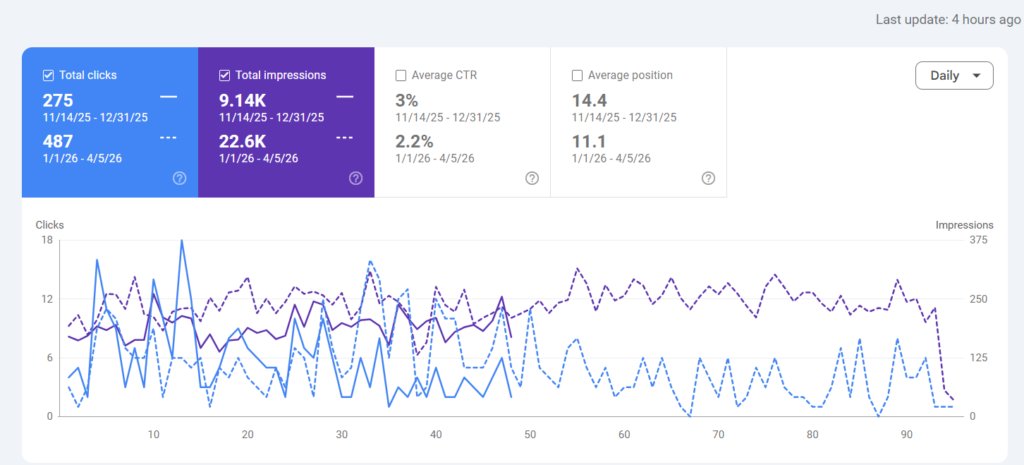
The Data Breakdown:
- Impressions: Scaled from 9.14K to 22.6K (+147%).
- Total Clicks: Increased from 275 to 487 (+77%).
- Average Position: Jumped from 14.4 to 11.1.
- Validation: Confirmed 0 Errors and 0 Warnings across Organization, Local Business, and FAQ nodes.
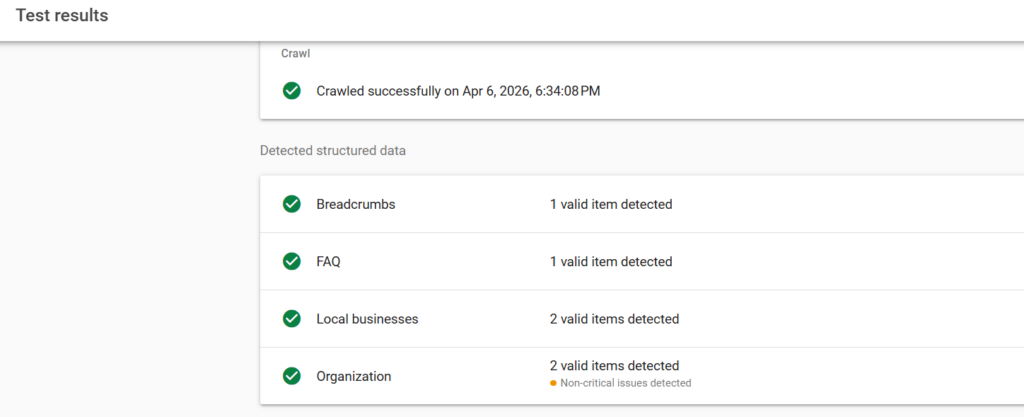
The Result: Securing the AI Citation
The most critical “Proof of Work” for a 2026 SEO authority is the AI Overview placement. Following the schema deployment, the Menovivre Clinic secured the primary citation for the highly competitive “Menopause Clinic” intent in the UAE.
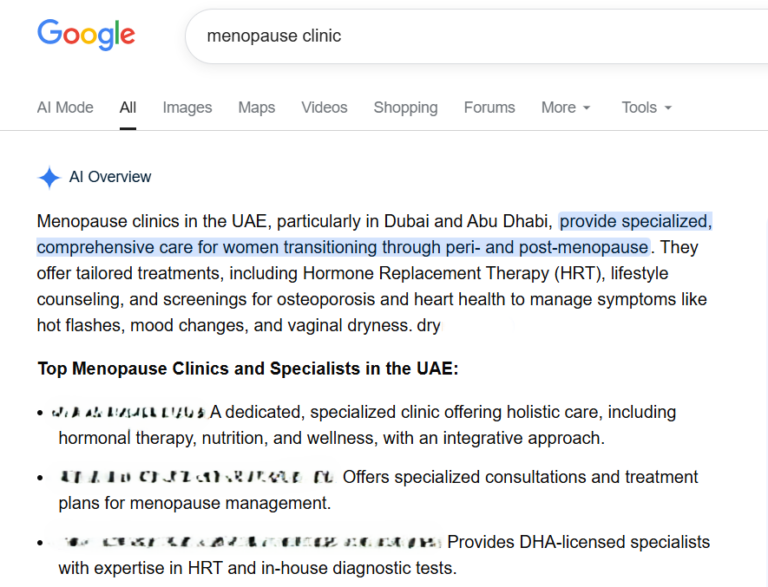
Observation: Note how the AI Overview summarizes the clinic’s specialized focus (HRT, hormonal therapy). This content was pulled directly from the description and medicalSpecialty nodes of our nested schema.
Conclusion
This case study confirms that Schema is no longer an “SEO add-on” it is the primary indexing language for Generative Search. In UAE entities, the “Attribution Gap” is the single greatest threat to brand visibility. When data is unstructured, LLMs (Gemini, ChatGPT) are forced to “hallucinate” or guess the relationship between a brand and its services. By deploying a Nested @graph Architecture, we moved from passive indexing to active Entity Resolution.
By architecting a clear entity relationship, we successfully:
- Increased visibility in traditional Google Search.
- Secured “AI-Citations” from LLMs like ChatGPT and Gemini.
Frequently Asked Questions
1. Why is nested @graph architecture superior to standard plugin Schema?
Standard plugins often output “flat” JSON-LD multiple independent blocks for Organization, Website, and LocalBusiness. This forces an LLM to spend “compute” connecting the dots. By using a Nested @graph, we provide a pre-mapped entity relationship using @id anchors. This reduces attribution latency, ensuring the AI identifies the brand as the definitive source of the services listed.
2. Does Schema directly influence ChatGPT or Gemini citations?
While LLMs use multiple data signals, Structured Data serves as the “Primary Source of Truth” for their retrieval-augmented generation (RAG) layers. In our UAE Medical Clinic environment, we observed that once the medicalSpecialty and MedicalBusiness nodes were correctly linked, the frequency of brand citations in AI Overviews for “Menopause Clinic Dubai” increased alongside the GSC impression surge.
3. How does ‘Data Attribution’ impact local SEO in the UAE?
In highly competitive markets like Dubai and Abu Dhabi, “LocalBusiness” schema is often crowded. By adding specific LLM Data Attribution layers such as sameAs links to DHA licenses, social profiles, and specific areaServed nodes you provide the “Machine Trust” necessary for an AI to confidently recommend a local clinic over a generic competitor.